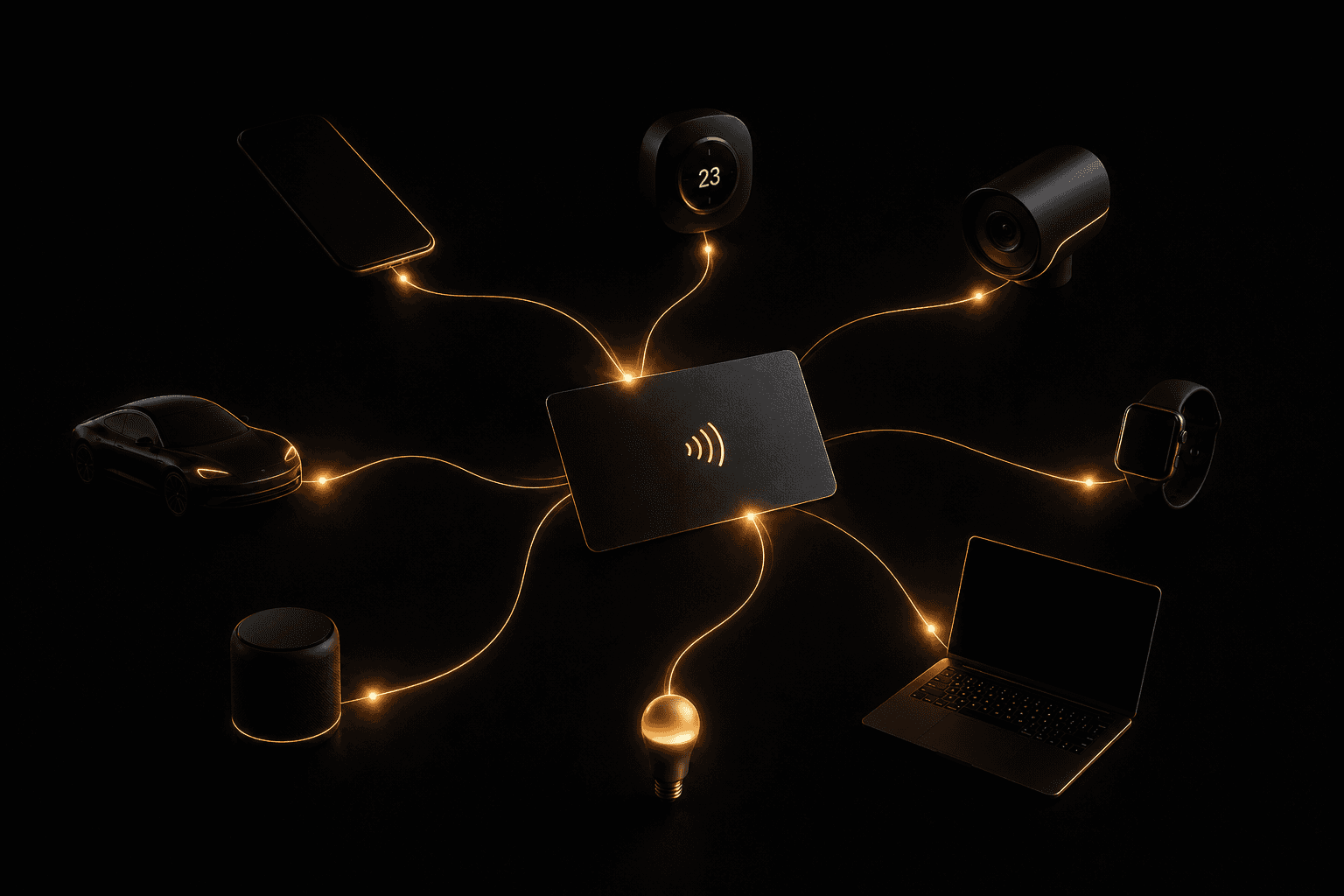

The Internet of Things (IoT) sounds like a topic for factories and smart cities, but the definition is surprisingly simple: a network of physical objects fitted with electronics that can exchange data with other devices and with the cloud. A sensor, a meter, a wristband - and, yes, an NFC card. Your business card is closer to that world than you think.
An object that is a gateway to data
The heart of IoT is connecting the physical to the digital. An ElitesCards card does exactly that:
- inside sits a passive chip that needs no battery,
- when a phone comes close, it passes along an encoded address,
- that address opens your profile and sets a flow of data in motion - a contact, a lead, a payment.
It's a small but full-fledged "connected" object: a physical thing that links a person to a system with one gesture.
Why it matters for business
In IoT the value lies not in the object itself but in the data flowing through it. The same is true of a business card. A piece of cardboard in a wallet is a dead object. An NFC card is a touchpoint that generates a signal with every tap: who, when, what they were interested in.
In the Internet of Things the most valuable thing isn't the object but what happens when it starts to speak. The NFC card is just starting to speak.
From gadget to infrastructure
Treating the card as a piece of IoT changes your perspective: it isn't decoration but the smallest element of a company's digital infrastructure. It collects data at the source, integrates with systems and scales with you - with no app anyone has to install.