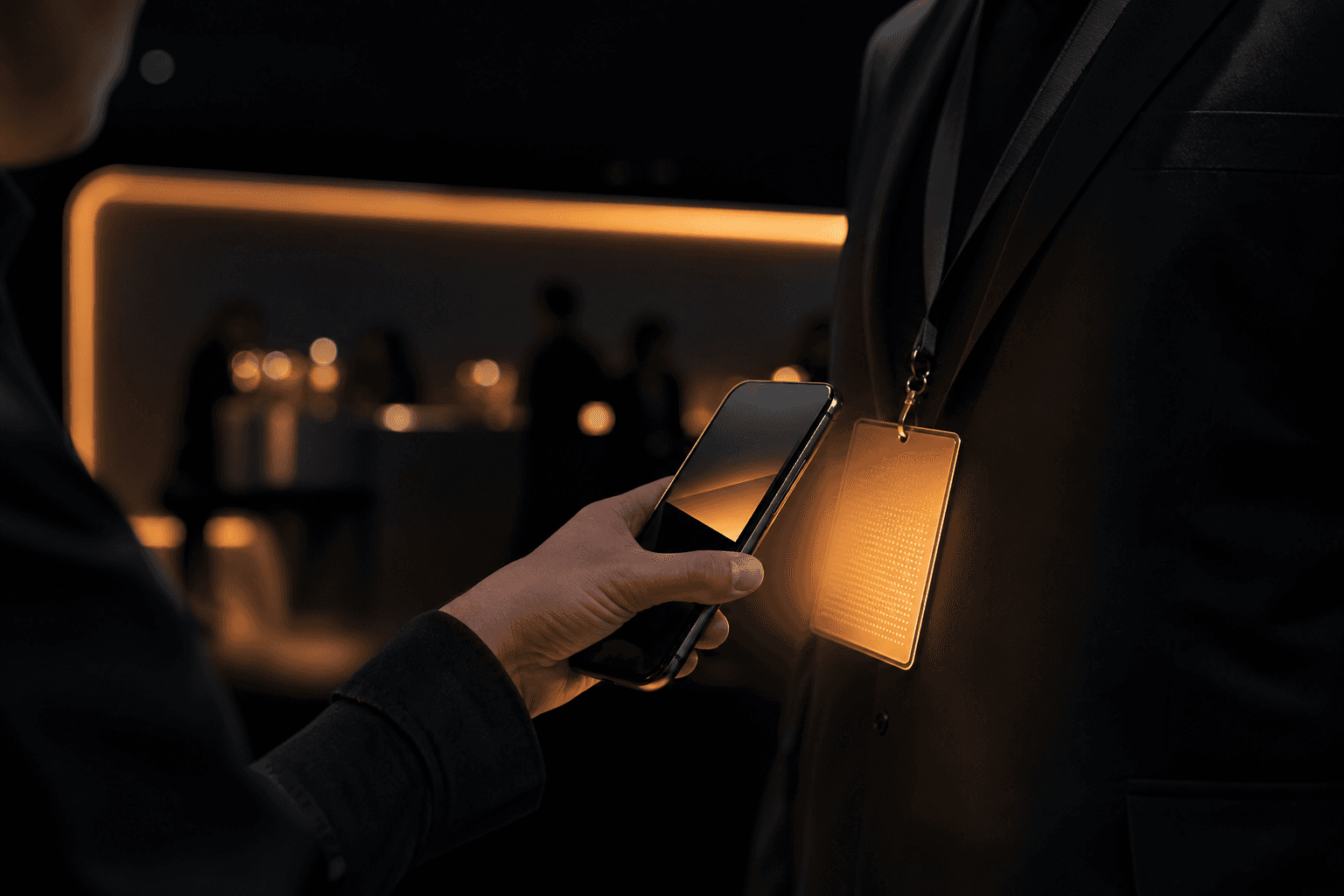

For years, scanning badges at trade shows looked the same: you rent the organizer's device, pay per user, and after the event you're left with an export to clean up yourself. It's expensive, fragmented and easy to lose contacts in. In 2026 it's worth expecting more.
Why it matters
Companies that retype business cards by hand after an event lose a large share of the pipeline before anyone makes the first call. And speed of response decides everything - a contact reached within a few minutes qualifies far more often than one from half an hour ago. A tool should shorten that time, not stretch it.
The features that actually count
- Universality - reading badges (OCR), QR codes and NFC without a separate integration for every event.
- AI enrichment - a high hit rate on verified email plus automatic firmographics.
- Real-time CRM integration - Salesforce, HubSpot and the like in seconds.
- Offline mode - local capture when the hall's network drops, syncing once the connection returns.
- On-the-spot qualification - your own questions, tags and meeting booking mid-conversation.
The best scanner isn't the one that displays a card most prettily. It's the one after which the lead is already in the CRM, enriched and ready to contact.
Rent or own
The organizer's scanner disappears after the last day of the show. Your own tool stays with you for every event that follows - and the data and contact history are yours. An ElitesCards card works in exactly this model: it's your permanent lead-capture point that doesn't end when the rental does.