The last day of the fair, an evening at the hotel or your first morning back at the office, you're left with a pile of business cards, notes on your phone and a few photos taken on the run. What you do over the next two days decides whether those conversations at the booth turn into relationships or just a list of names. Here's a plan you can follow even after several days on your feet.
Why 48 hours
For the first couple of days, the people you met still remember your booth, what you talked about and what you agreed. After that, their inbox fills up with messages from other exhibitors and the memory starts to blur. It isn't about rushing for the sake of it. It's about getting your message in before someone starts wondering, “was that the packaging company or the labels one?”
Two days is also a realistic window for a team. Day one is for sorting out your contacts; day two is for messages and calls.
Hour zero: a note straight after each conversation
Good follow-up starts at the booth. After every conversation, jot down three things: who the person is, what they need and what you agreed. A note on your phone or a line on the back of their business card is enough.
A note might read: “Anna, purchasing, needs samples before deciding; send catalogue, call on Thursday.” One line that will save you a lot of guesswork two days later.
If they left their details through the form on your page, their enquiry is already waiting in the enquiry inbox in your panel. Then all you need to note down is the context: what they asked about and what caught their interest. And if you're still choosing how to capture contacts at the booth, have a look at our post on badge scanners at trade fairs.
Day one: sort your contacts
Not every contact needs the same response. Split them into three groups:
- Hot: a specific need and a request for an offer, a quote or a meeting. You get in touch the same day.
- Warm: genuine interest, but nothing urgent. You send a message with materials and suggest a call.
- Later: a good conversation, but not the right fit for now. A short thank-you and a link to your page, so they know where to find you.
If you came back with a lot of contacts, a simple scoring model helps, we describe one in Lead scoring, how to decide which contacts to work first.
Agree who on the team owns each contact, too. One person on their side, one person on yours, otherwise the client gets two different messages, or none at all.
Day two: a message that picks up where you left off
Open with something specific
Every exhibitor will write “lovely to meet you”. You write about what you actually discussed: the samples, the timeline or the problem they described at the counter. That one sentence shows the message was written for them, not for a mailing list.
Send one link instead of three attachments
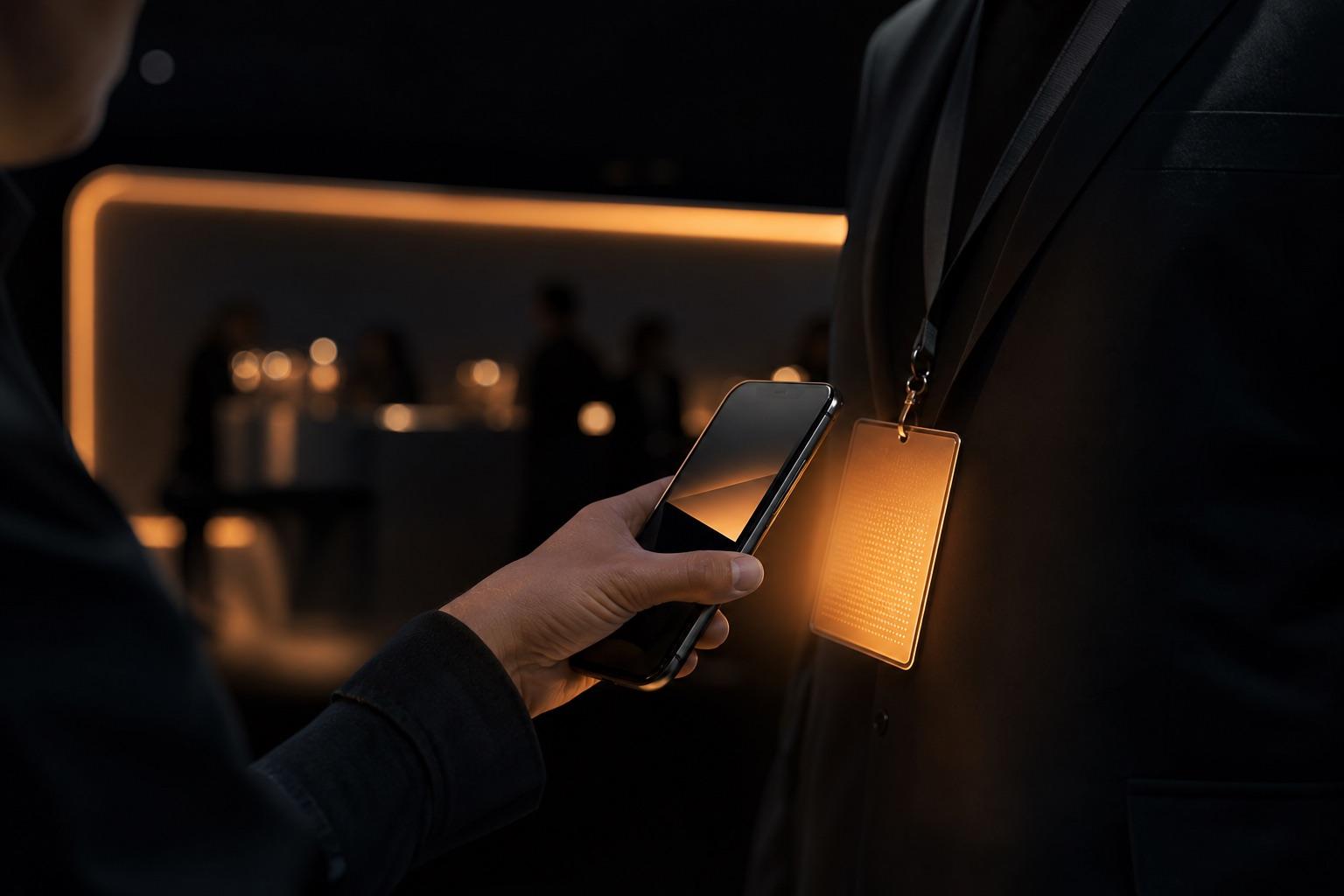
Rather than a PDF catalogue, a price list in a separate file and a presentation in a third, send a link to your page. It's the same page they opened at the booth by tapping your NFC card or scanning the QR code: your offer, video, catalogue and form in one place. It opens in their phone's browser, with no app and nothing to download.
The page becomes your shared point of reference. They saw it at the fair, they get it in your message and they can pass it on to whoever makes the decision. And because the link never changes, anything you add in the panel after the fair is visible to everyone, whether they tapped the card at the booth or click the link in your email.
Suggest one next step
End the message with a single proposal: a call, samples, a meeting or a quote. If you've embedded a calendar on your page, such as Calendly, they can choose a time themselves. One step is far easier to say yes to than a list of five options.
For example: “Hello, thank you for stopping by our booth on Thursday. As promised, here's the link to our page with the models you asked about: [link]. Would a short call next week suit you? You can pick a time straight from the calendar on the page.”
Follow-up isn't a reminder that you exist. It's the next part of a conversation the other person still remembers.
A reminder without being pushy
If there's no reply, one reminder a few days later is perfectly fine. Keep it short and bring something new: an answer to a question from the booth, news about samples or a suggested time to talk. Put the reminder date in your calendar on the same day you send the first message.
If there's still silence after the reminder, that's an answer too. The contact moves to “later” and your page carries on working: the link stays in their inbox and, if they used the “Save contact” button, your details are already on their phone.
The visit statistics in your panel will show whether the page was opened more often after the fair and after your messages went out. Treat that as a general sign of interest, not as tracking individual people.
Where to start before your next fair
- A booth page with your offer, video, form and a “Save contact” button, ready before you travel.
- An NFC card on the counter, a QR code on the banner and a link in your email signature, all leading to the same place.
- A note template: who, what they need, what the next step is.
- Contacts split into hot, warm and later, each with a named owner.
- A first-message template with room for a detail from the conversation and the link to your page.
- The reminder date already in your calendar.
Preparing for your next event? See what a trade fair page can look like, with your offer, a catalogue and a form that sends enquiries straight to your panel.